
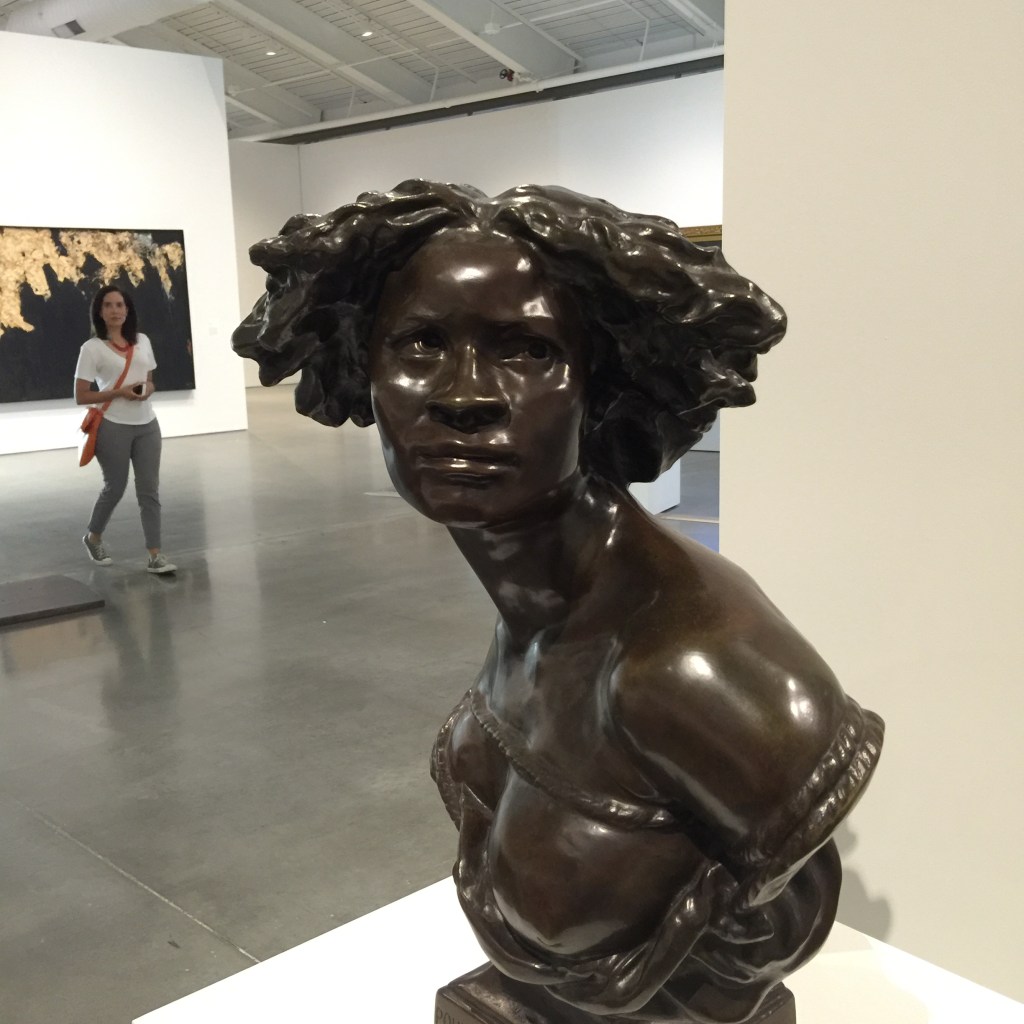
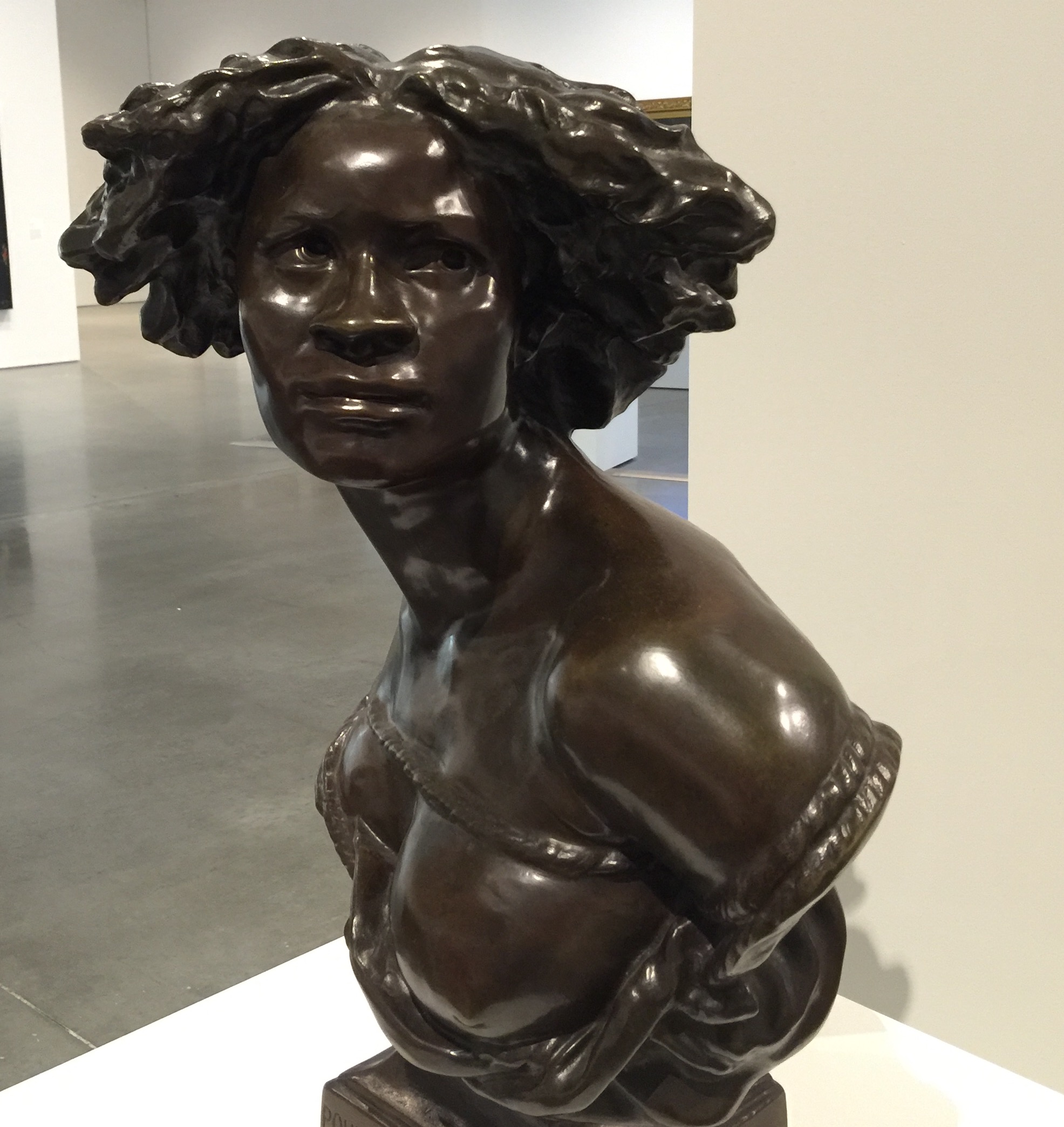
In many ways the bronze sculpture feels exposed, like a fish out of water in the main gallery at BAMPFA. La Négresse sits in proximity to a neon Dan Flavin, a collection of brightly colored, large scale Hans Hoffman paintings and a Philip Guston. The gallery placement of the bust reveals a dramatic contrast between time and medium.
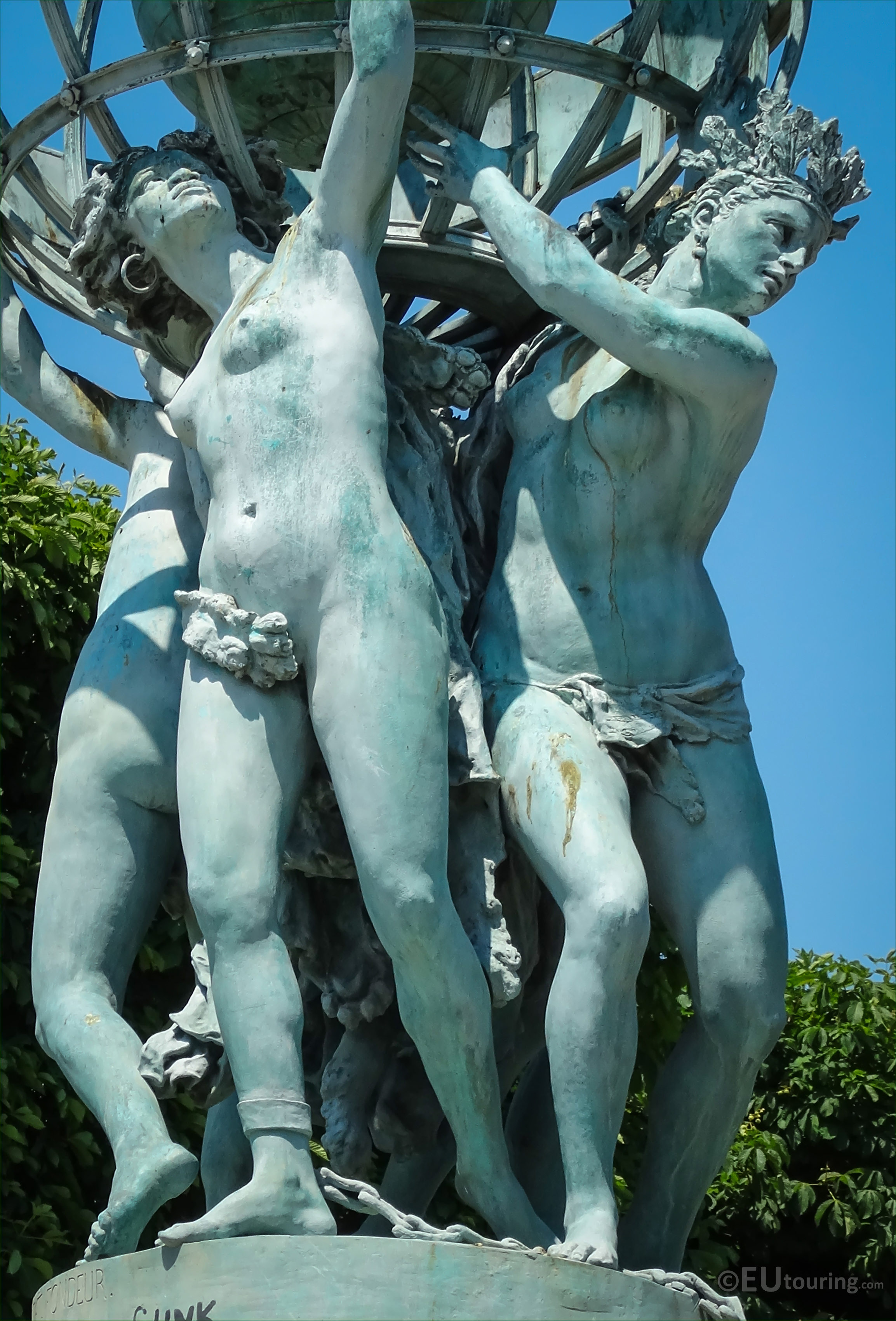
Carpeaux’s bronze cast is a study that was part of “Fontain de l’Observatoire” in the Luxembourg Garden in Paris. The fountain consists of 4 women representing 4 different continents, whose bodies subtly twist toward a global sphere placed in the middle of the fountain. The women are flanked by horses that appear to be charging out of the water.

“Pourquoi naître esclave” (Why born a slave?)
It is unclear if Carpeaux was challenging the institution of slavery, Africa and Europe’s role in slavery, or America’s resistence to abolish it. I do find it interesting that in Carpeaux’s bronze study, the ropes are loosely bound, but her arm placement suggests that her hands could be bound. The final fountain (which was completed while the artist’s health was failing) features a full standing figure in ankle shackles. This not only distills Africa’s existence to the institution slavery, but it is also a monolithic portrayal that ignores the limitless, innovative contributions of Africans across the diaspora and the world. In other words, do we see beyond slavery? Ultimately, Carpeaux’s question engraved on the bust challenges that monolithic view while also reinforcing it.

Both works explore the idea of people being enslaved by imagery. In both “La Négresse” and “After la Négresse” we are left wondering if the subjects are being liberated from their plight or held captive to it. As a representation of Africa, does slavery encapsulate an entire race? Similarly, when we look at the state of black men today, are they trapped by imagery perpetuated by the media? Neither views are comprehensive but both demand exploration.
 Colony Little, Culture Shock Art
Leave a comment