


The Huntington Library acquired The Blue Boy by Thomas Gainsborough in 1921, and it has graced the walls of the Library as one of it’s crown jewels ever since. The piece has never been loaned or taken out of view for an extended period of time, and the only exception was made in 2017 when the Huntington took the painting down for 3 months to assess overdue restoration needs.
During this time they discovered that the many layers of varnish that had been added to the painting over the years has both dulled and yellowed the work, reducing its visual clarity. Additionally, in some areas the paint began to lift and flake. Even more troubling, the canvas has developed some structural issues and began to separate from its support lining.
As a result of this extensive evaluation, The Huntington developed a treatment plan and secured a $150,000 Getty Foundation conservation grant to execute the repairs.
In addition to the foundation’s grant which is part of the Getty’s “Conserving Canvas” initiative, the library has also received underwriting support from Bank of America to launch a year-long, multi-phase conservation effort to restore the Huntington’s treasured painting.
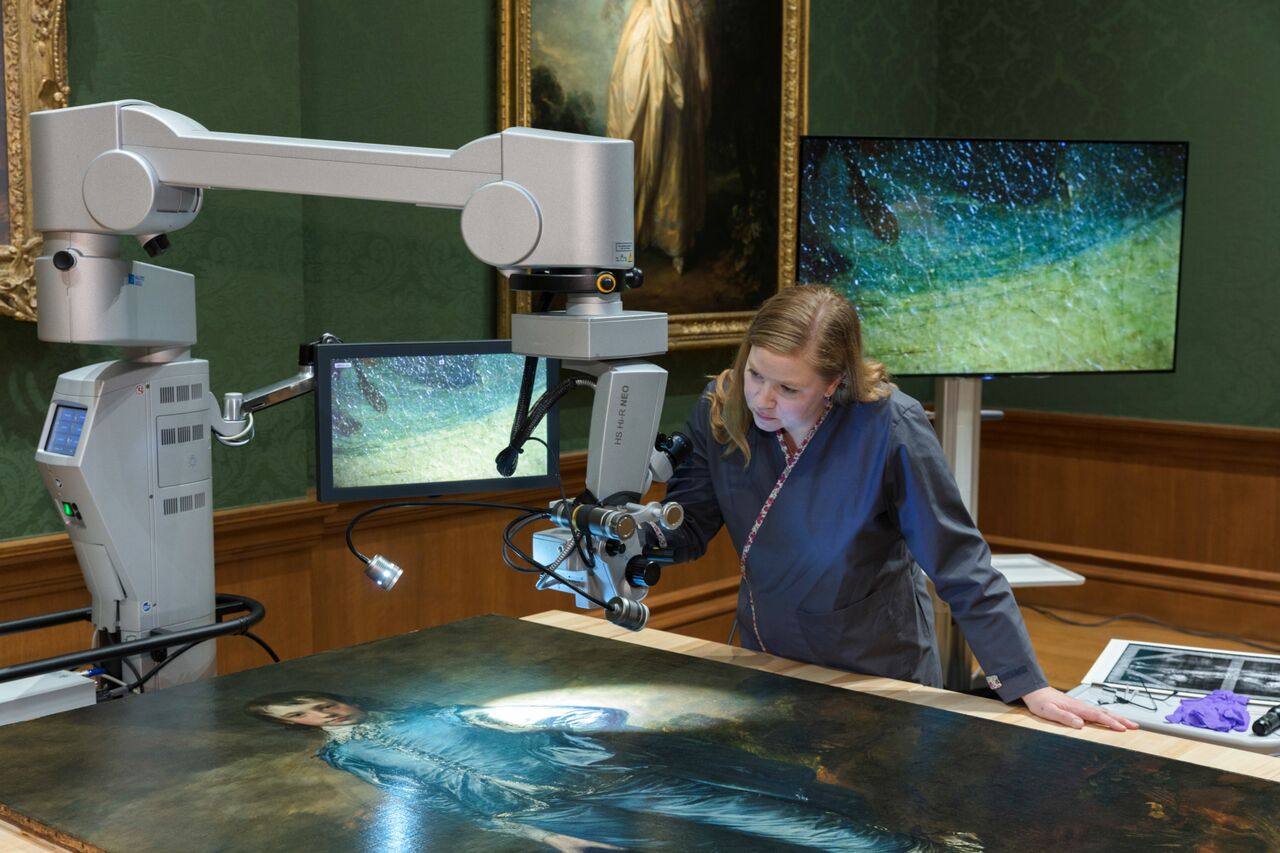
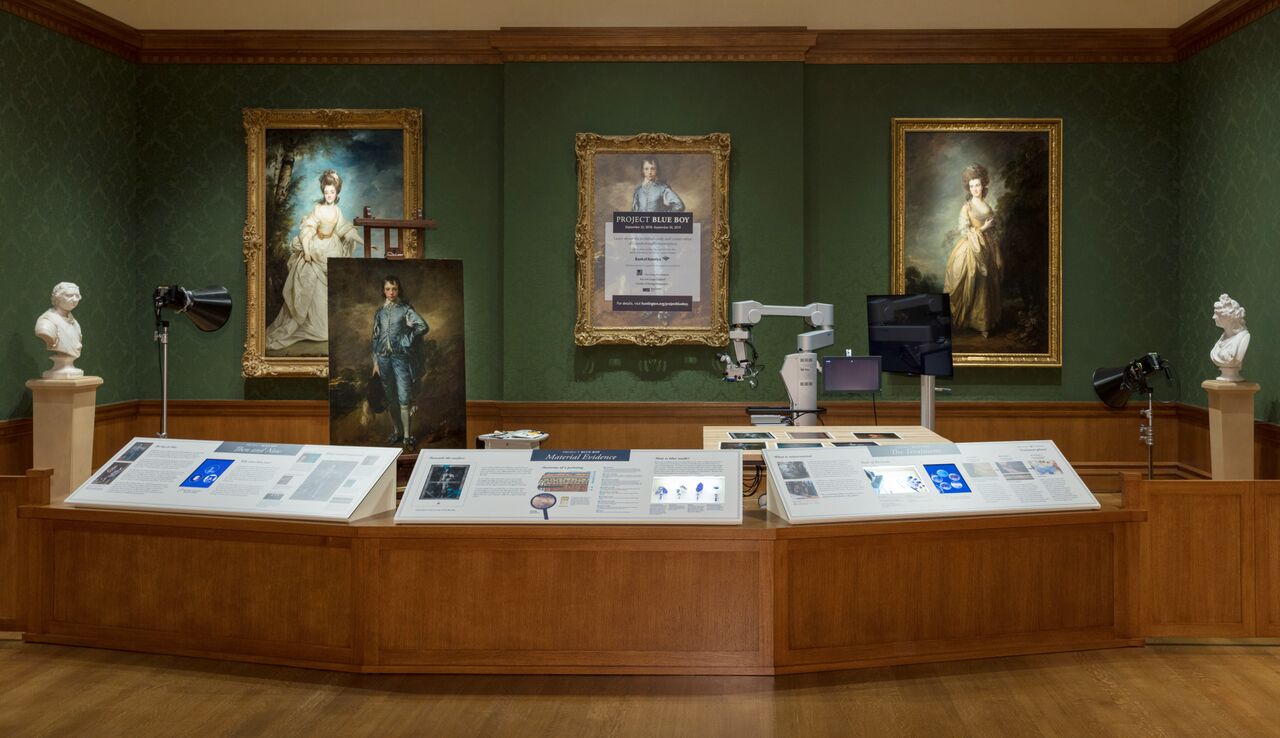
With “Project Blue Boy”, the Huntington will complete the repairs and restoration of the canvas, and they will make phases of the treatment process visible to visitors by retrofitting the library’s gallery space into a makeshift conservation lab.
This transparency will lift the veil of conservation, exposing visitors to the complexities and intricacies of the practice.
Conservators do much more than surface cleaning and repair work. They’re also detectives, forensic scientists, subject matter experts for insurance claims adjusters, chemists, and cosmetic surgeons that use an arsenal of scientific tools and processes to uncover mysteries that lie beneath the canvas. As stewards and custodians of the work, their job is to document and catalog prior treatments and damage subjected to canvas. Ultimately, this process also sheds light on historical, social, and economic variables that went into making the original work and preserving it over time.
Using advanced imaging processes that include X-Ray technology, Infrared Reflectography, UV illumination and surgical microscopes, the conservation team has revealed some unique characteristics of this iconic painting. Over the years they have discovered a number of hidden features of the canvas including a repaired tear and a fluffy brown dog that Gainsborough painted over, turning its paws into stones. We also learned that Gainsborough’s canvas was repurposed from a work featuring the head of an old man. The apparitions from the canvas’ former life become visible using these technological tools.

The Library’s conservation team has done an excellent job of providing didactic content to teach visitors about the painting, its history, and the restoration process. My favorite part of the material includes the light boxes that illuminate the unseen aspects of the canvas that lurk beneath the surface.
Some mysteries behind the work may never be truly known. While many guesses have been made about the identity of the legendary painting’s subject, conservation efforts will not likely determine who the Blue Boy actually was, nor will they be able to truly resolve the rumors about Gainsborough’s use of the color blue which allegedly resulted from a bet to prove a fellow artist wrong. Perhaps some details are better left to mythology and folklore, as they continue to add richness to the painting’s history.
 Colony Little, Culture Shock Art
Leave a comment