


As we commemorate the birthday of Rosa Parks today, I wanted to highlight the work of an artist who not only honored Parks, but also created a series of works that celebrate the women of the Montgomery Alabama Bus Boycott of 1955-1956. These women are not as well known as Parks, but became an important catalyst to the boycott, providing sustained support of the Civil Rights movement. In 2018, artist Lava Thomas created portraits of Parks and 11 other women who were arrested on February 21,1956 for their role in organizing and participating in the protest.
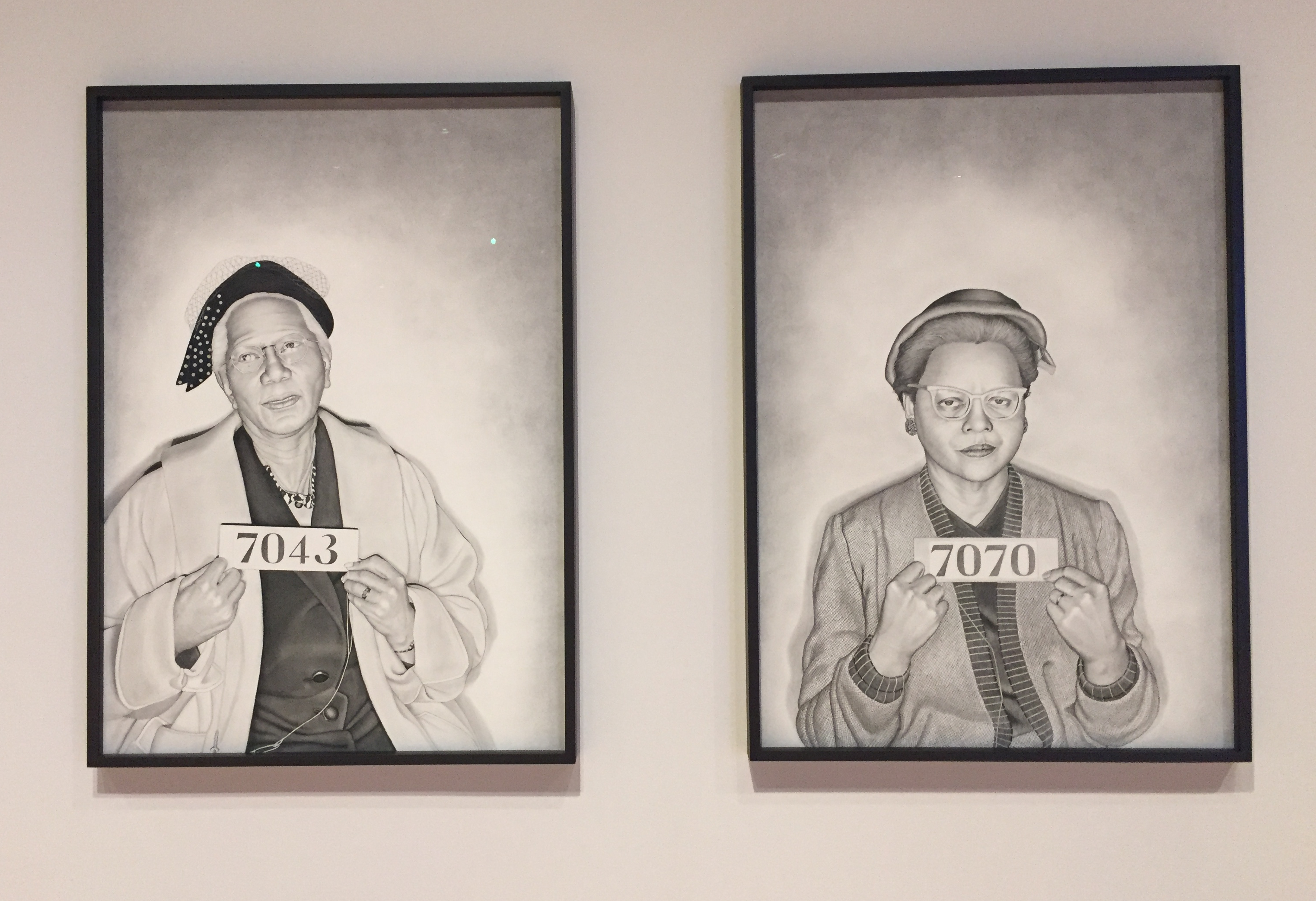
This series claims space for these women within the movement by reclaiming their mugshots and sketching them as portraits. While history conspires to distill the lives and work of these women into a single mugshot, Thomas’ sketches, which are larger in scale, invite a fuller narrative that opens the door to preserve their activism.

Curator and scholar Leigh Raiford contextualizes the subtleties captured within the graphite pencil strokes in the portraits of the women that emphasize unique details: “Through their choice to dress in their church attire rather than work clothes, through their unashamed comportment before the camera of the state, these women and so many like them transformed mug shots into portraits, asserted their individuality rather than “proving” a fictional racial essence.”
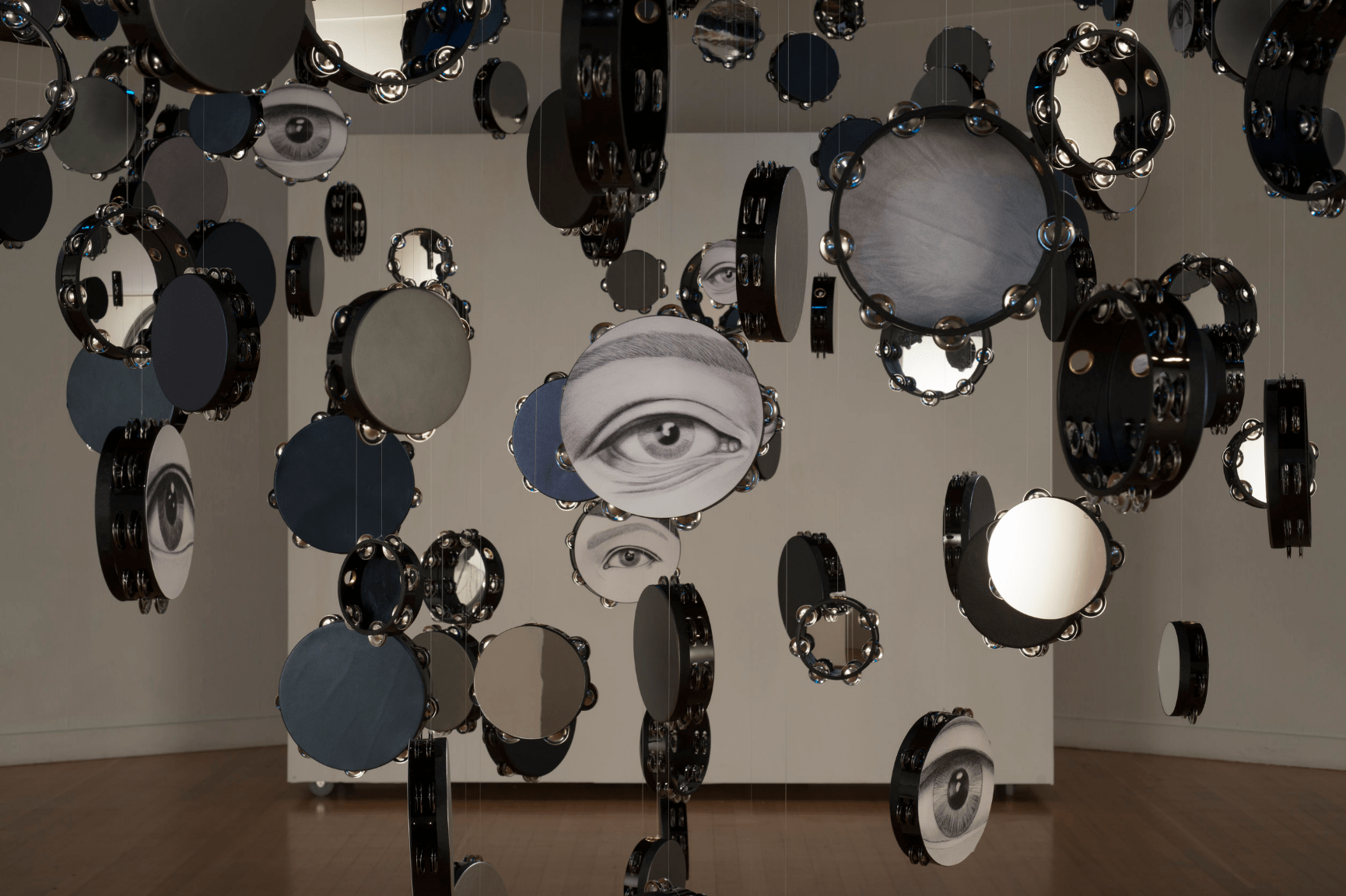
In her essay on Lava Thomas’s 2018 Mugshot Portraits series, Raiford goes on to draw important connections between this body of portraiture to her tambourine installations, which are my favorite works by the artist. “It reminds us of the necessity of the small but powerful sound. It is a profoundly egalitarian instrument that requires little in the way of specialized skill or formal training, but rewards desire and commitment. The tambourine is the sound and instrument of the Beloved Community.”
 Colony Little, Culture Shock Art
Leave a comment