
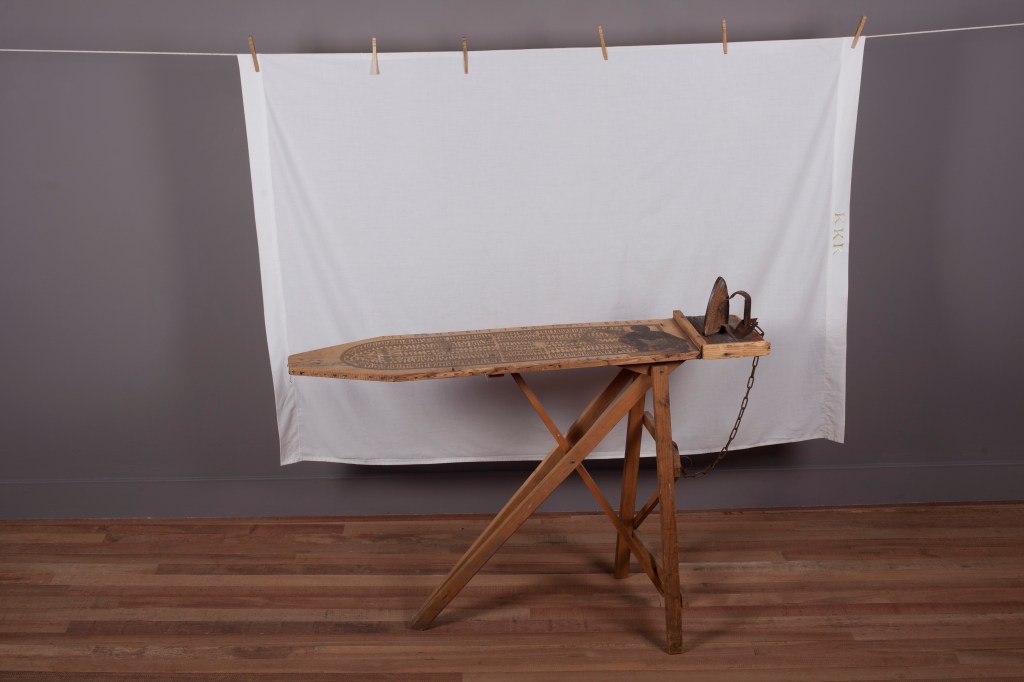
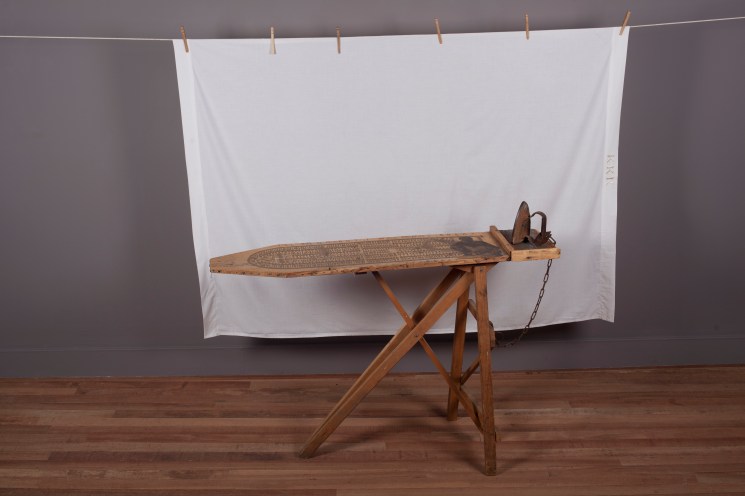
From a distance the scene is a seemingly innocent nod to nostalgized images of laundry wafting in a gentle spring breeze. A closer inspection of the board and the sheet reveal something far more sinister. The top of the ironing board contains a screen printed image of the cargo hull of a slave ship and embedded in hem of the bright white sheet are the letters “KKK” embroidered in white silk thread. The piece called “I’ll Bend, But I Will Not Break” stuns viewers with a sucker punch that comes from a lone piece of cotton that’s charged with the racist remnants of slavery. In Keepin It Clean, Saar’s latest solo exhibition airs America’s dirty laundry and the great lengths our nation takes to conceal the stains of our past. In classic Saar fashion the message in her work is layered, offering the viewer a path to redemption with a salient reminder that there’s always more work to be done.
The show revolves around a series of washboard assemblages Saar exhibited in a 1998 show called Workers and Warriors at the Michael Rosenfeld Gallery in New York. The vintage washboards, made from wood and metal are combined with other found materials including clocks, weathered bars of lye soap made from animal fat, and various forms of detritus including photos and snippets of prose. The central figure in the majority of the assemblages is Aunt Jemima, the caricature turned warrior in Saar’s seminal 1972 piece called “The Liberation of Aunt Jemima”. History has shown the power of iconography to plant the seeds of dehumanization that perpetuated genocide, massacres and institutional racism. By recontextualizing harmful iconography, Saar plants new seeds of redemption and empowerment. As Kellie Jones observed in her book South of Pico, “we can also consider Saar’s recycling and reinvention of contemptible collectibles as part of a broader act of wide-ranging cultural restructuring and redefinition.”
As much as Saar’s 1998 Workers and Warriors show harkened back to 1972 under the guise of “Unfinished Business”, Saar’s work in Keepin’ It Clean reminds viewers that there’s more unfinished business. In addition to the washboards created in the late 1990s and early 2000s, Saar has created 6 new works between 2015 and 2017 that address the current fragility of the black male body under the ever-present specter of police brutality. In the works on display her use of repetition in content and phraseology remind us that the pathology behind racism not only recurs, but it has taken on new form. However, out of these tragedies black women have mobilized in response to them.
“Extreme Times Call for Extreme Heroines”
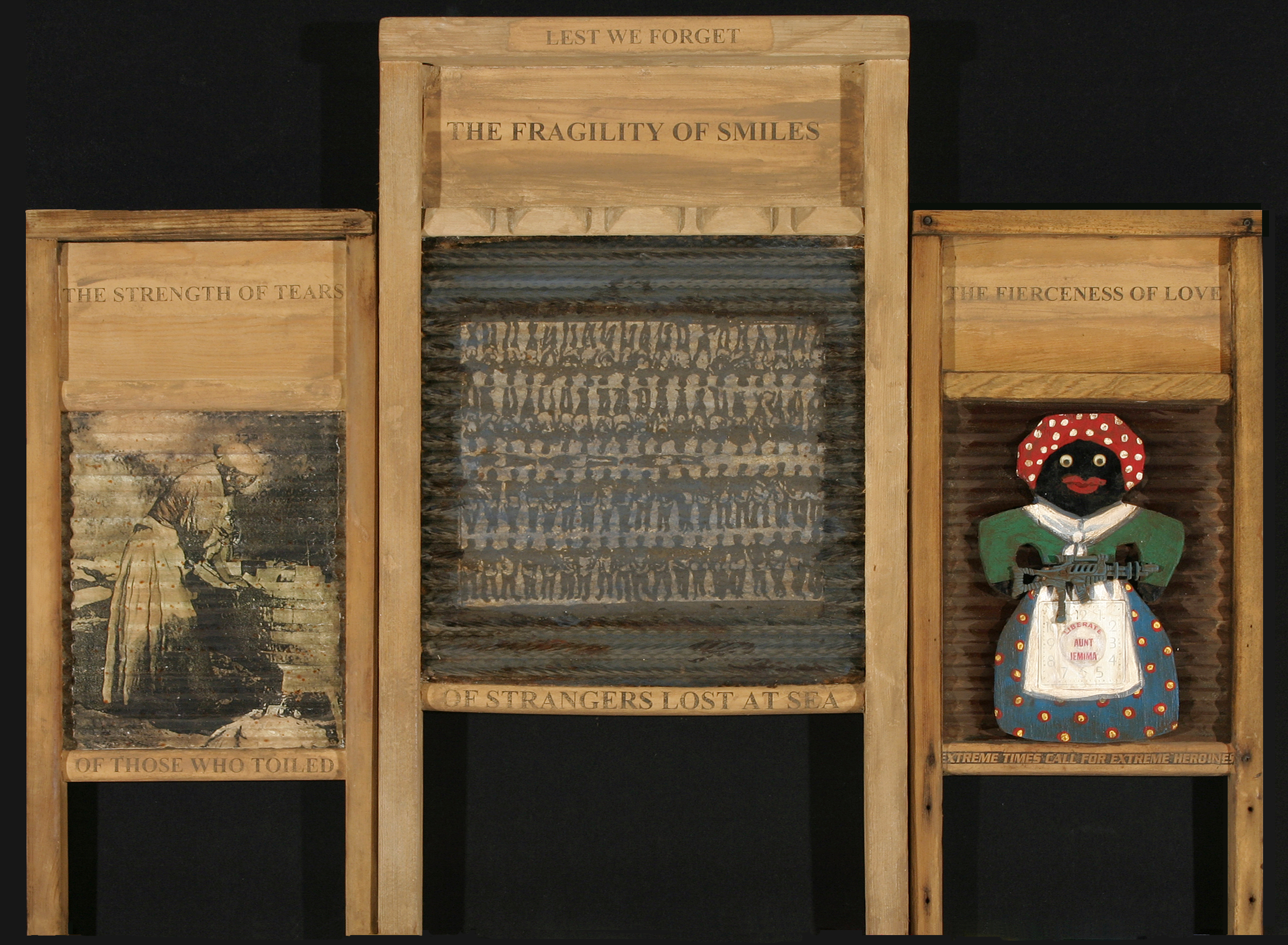
Just like the redefined heroine in “The Liberation”, the transformative networks created by black women in the late 1800s were tools of empowerment that enabled women to command better wages and more control over how their work was structured. In Keepin’ It Clean Saar’s washboards have been refashioned into totemic objects that pay tribute to the generations of black women before us who have worked tirelessly and selflessly in service of their families and others. This legacy of power borne out of a response to racism and violence serves as both a tribute and an admonishment by Saar that we’ve got to “clean up our act.”


 Colony Little, Culture Shock Art
Leave a comment